Mingxuan Jiang, Mohan Sun, Nuo Cheng, Mihkel Örd, Teresa L. Augustin, Allyson Li, Neel H. Shah, Jesse Rinehart, Helen R. Mott, Pau Creixell
Molecular Cell
Volume 86, Issue 18P3822-3839.E7 September 17, 2026
Combinatorial deep mutational scanning uncovers protein superbinders and molecular determinants of epistasis
Mingxuan Jiang, Mohan Sun, Nuo Cheng, Mihkel Örd, Teresa L. Augustin, Allyson Li, Neel H. Shah, Jesse Rinehart, Helen R. Mott, Pau Creixell
Molecular Cell
Volume 86, Issue 18P3822-3839.E7 September 17, 2026
Summary
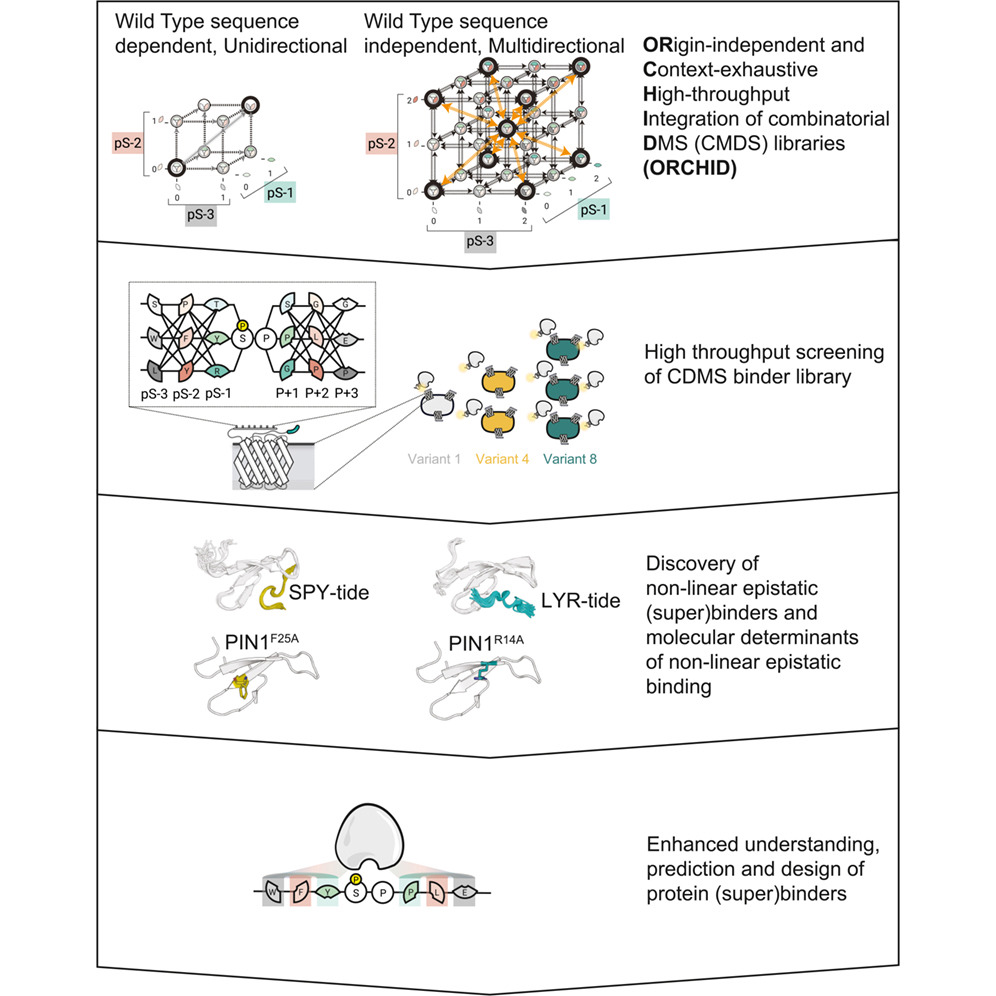
Traditional deep mutational scanning (DMS) encodes every single amino-acid substitution from a wild-type sequence. We hypothesize that combinatorial DMS (CDMS) libraries, incorporating all mutations in all combinations, can enable the discovery of high-affinity protein (super)binders by capturing epistatic, non-linear amino-acid interactions. Here, we introduce origin-independent and context-exhaustive high-throughput integration of combinatorial DMS libraries (ORCHID), which systematically maps regions of wild-type-independent epistasis across all mutational contexts and trajectories. For benchmarking, we build a high-throughput peptide display assay measuring PIN1WW-domain affinity for a CDMS peptide library containing phosphoserine via amber codon suppression. ORCHID raises prediction accuracy by 45% over non-epistatic models. We identify and structurally characterize two epistatic superbinders, SPY-tide and LYR-tide, binding 3- to 5-fold tighter than current optimal PIN1WW-domain binders through “fold-and-turn” and register-shifted conformational changes. We also identify two molecular determinants of epistasis, PIN1F25 and PIN1R14, that natively encode non-linear binding and, when mutated, abolish it. Hence, natural proteins recognize peptides non-linearly, offering opportunities for improved binder design.
Marc Creixell, Scott D. Taylor, Jacqueline Gerritsen, Mingxuan Jiang, Song Yi Bae, Teresa Augustin, Michelle Loui, Carmen Boixo, Saki Minamino, Victoria Gong, Pau Creixell, Forest M. White, Aaron S. Meyer
Cell Reports
Volume 45, Issue 7, 28 July 2026, 117717
AXL phosphosite mapping links FAK1 and YAP1 signaling to erlotinib resistance in EGFR-mutant lung cancer
Marc Creixell, Scott D. Taylor, Jacqueline Gerritsen, Mingxuan Jiang, Song Yi Bae, Teresa Augustin, Michelle Loui, Carmen Boixo, Saki Minamino, Victoria Gong, Pau Creixell, Forest M. White, Aaron S. Meyer
Cell Reports
Volume 45, Issue 7, 28 July 2026, 117717
Abstract
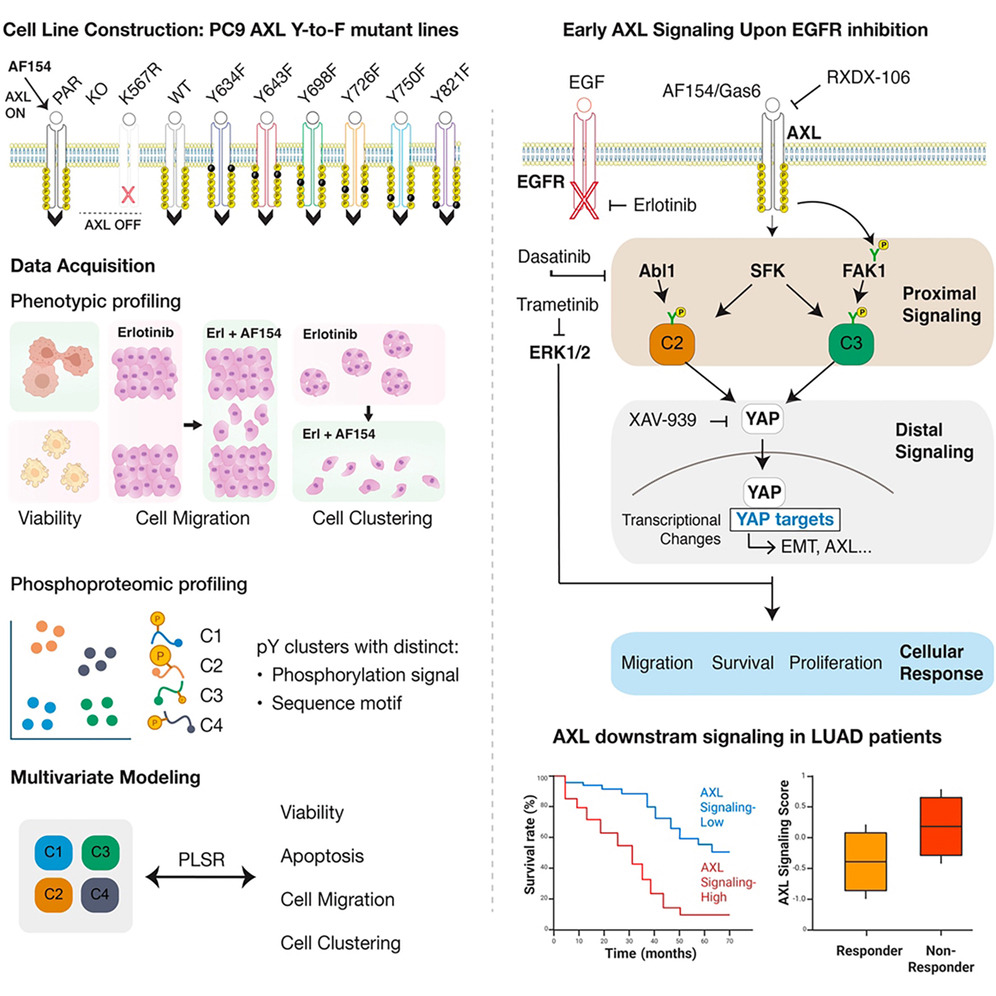
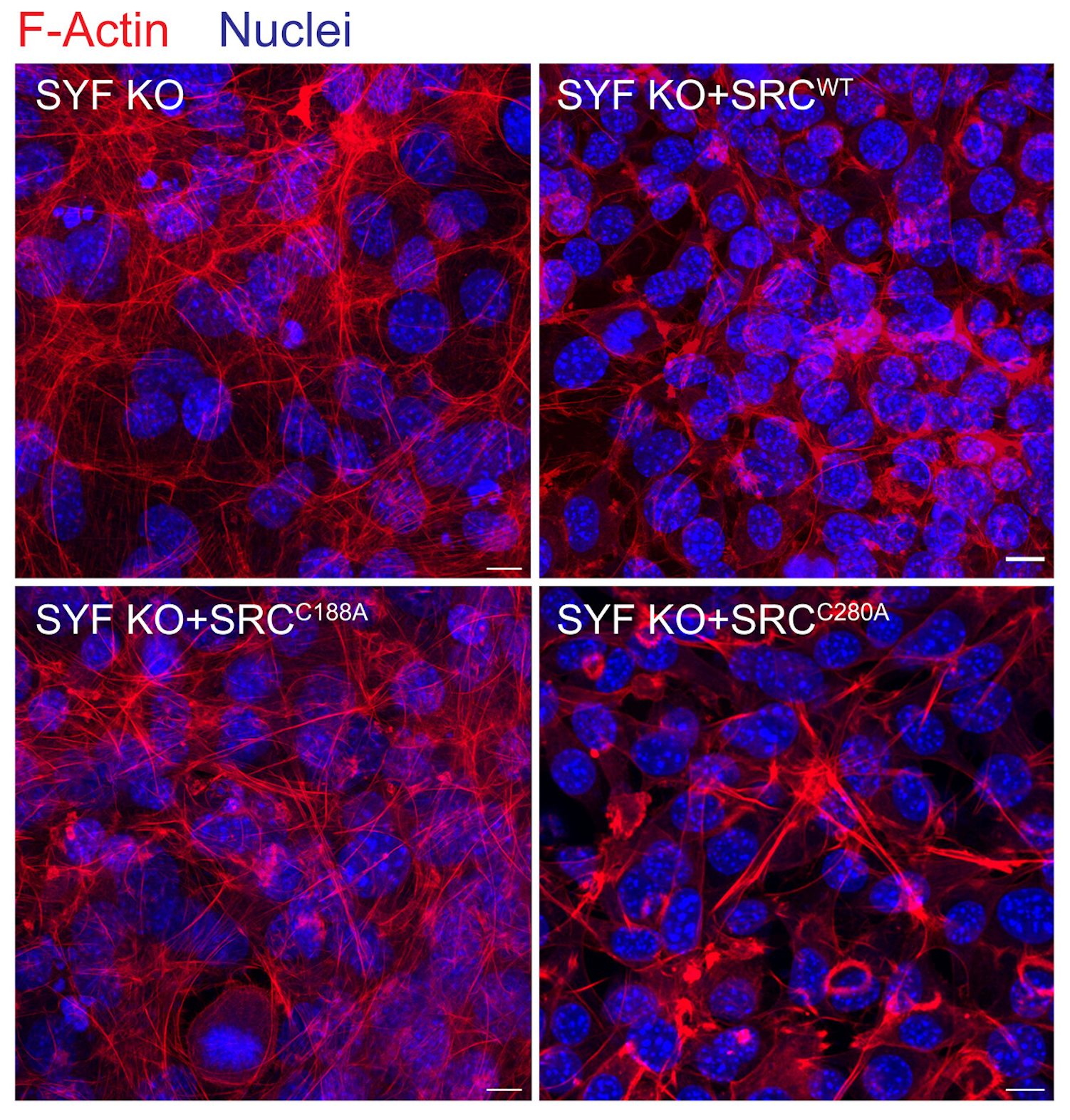
Targeted therapies for receptor tyrosine kinases are effective but invariably limited by drug resistance. In EGFR-mutant lung cancer, AXL activation drives resistance to erlotinib by restoring cell survival and migration. To map these signaling mechanisms, we generated a panel of lung adenocarcinoma PC9 cell lines with phenylalanine substitutions at each intracellular AXL tyrosine residue. By integrating phosphorylation data with phenotypic changes via multivariate modeling, we found that AXL signaling organizes into two clusters enriched for Abl1 and SFK substrate motifs. A peptide specificity screen identified FAK1 as a top proximal substrate of AXL. Downstream, AXL-mediated YAP1 activation was found to sustain drug tolerance, while combined inhibition eliminated persister cells in vitro. These AXL and YAP pathways correlate with disease progression and poor clinical outcomes in erlotinib-treated patients. Collectively, this study dissects the specific signaling regulators by which AXL drives erlotinib resistance.
Nature Structural & Molecular Biology
(2025) 32, 1517–1527
Binding of heterochromatin protein Rhino to a subset of piRNA clusters depends on a combination of two histone marks
Nature Structural & Molecular Biology
(2025) 32, 1517–1527
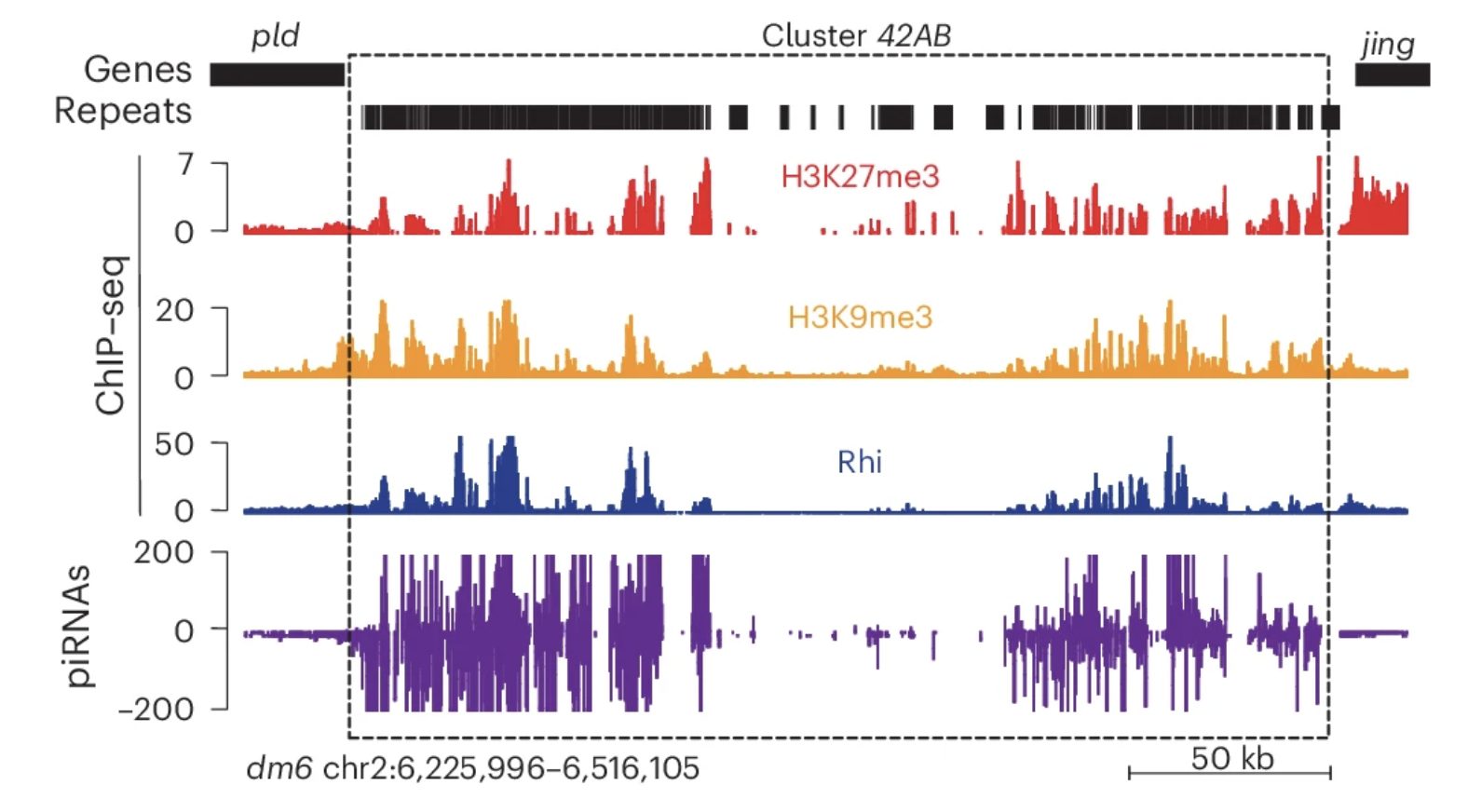
Abstract: Animal germ cells deploy a specialized small RNA-based silencing system, called the PIWI-interacting RNA (piRNA) pathway, to prevent unwanted expression of transposable elements (TEs) and maintain genome integrity. In Drosophila melanogaster germ cells, the majority of piRNA populations originate from dual-strand piRNA clusters, genomic regions highly enriched in TE fragments, via an elaborate machinery centered on the Heterochromatin Protein 1 homolog, Rhino. Although Rhino binds to peptides carrying tri-methylated H3K9 in vitro, it is not fully understood why in vivo only a fraction of H3K9me3-decorated heterochromatin is occupied by Rhino. Recent work revealed that Rhino is recruited to a subset of piRNA clusters by Kipferl. Here we identify a Kipferl-independent mode of Rhino recruitment that, in addition to the previously established role of H3K9me3, also depends on the histone H3 lysine 27 methyltransferase Enhancer of Zeste. At Kipferl-independent sites, we find that Rhino specifically binds to loci marked by both H3K9me3 and H3K27me3 via its chromodomain. Although the exact mechanism of how Rhino binding is influenced by dual histone modifications remains unclear from a structural and biochemical perspective, our work suggests that combinatorial modifications may regulate the specificity of chromatin-binding protein interactions. These findings provide an enhanced understanding of how Rhino targets piRNA source loci, highlighting the sophisticated epigenetic landscape governing TE silencing in Drosophila germ cells.
Science Signaling
(2018), 11(555), eaar3250
Engineering allosteric regulation in protein kinases
Science Signaling
(2018), 11(555), eaar3250
Phosphoregulation, in which the addition of a negatively charged phosphate group modulates protein activity, enables dynamic cellular responses. To understand how new phosphoregulation might be acquired, we mutationally scanned the surface of a prototypical yeast kinase (Kss1) to identify potential regulatory sites. The data revealed a set of spatially distributed “hotspots” that might have coevolved with the active site and preferentially modulated kinase activity. By engineering simple consensus phosphorylation sites at these hotspots, we rewired cell signaling in yeast. Using the same approach with a homolog yeast mitogen-activated protein kinase, Hog1, we introduced new phosphoregulation that modified its localization and signaling dynamics. Beyond revealing potential use in synthetic biology, our findings suggest that the identified hotspots contribute to the diversity of natural allosteric regulatory mechanisms in the eukaryotic kinome and, given that some are mutated in cancers, understanding these hotspots may have clinical relevance to human disease.